Interactive kiosks are no longer futuristic concepts. They are essential tools reshaping how businesses serve customers and streamline operations across the globe.
From speeding up a retail checkout to managing a patient’s hospital visit, these self service stations create efficient, accessible, and engaging touchpoints.
For any organization evaluating this technology, reviewing practical interactive kiosk examples provides a clear roadmap for deployment and highlights the compelling kiosk ROI.
This guide explores 13 powerful categories, demonstrating how a well designed kiosk interface and robust kiosk software can enhance the digital customer journey, ensure kiosk security, and provide valuable kiosk analytics.
Retail: Empowering the In-Store Shopper
Retail kiosks deal with cart abandonment and long lines by putting control directly into the customer’s hands, creating a seamless omnichannel experience.
- Self-Checkout Kiosks: Global giants like Walmart, Target, and Carrefour deploy these kiosks to reduce wait times. Customers scan, bag, and pay independently, with integrated scale systems for security and seamless payment integration.
- Endless-Aisle Kiosks: Brands such as Groupe Dynamite use these in Dynamite and Garage stores. When an item is out of stock in-store, customers use the kiosk to browse the full online catalog, order the product, and have it shipped home, effectively making inventory limitless.
- Virtual Try-On Kiosks & Smart Mirrors: Zara implements augmented reality mirrors in flagship stores, allowing shoppers to see how different clothing items would look on them without entering a fitting room, enhancing engagement and decision speed.
Food Service: Streamlining the Dining Experience
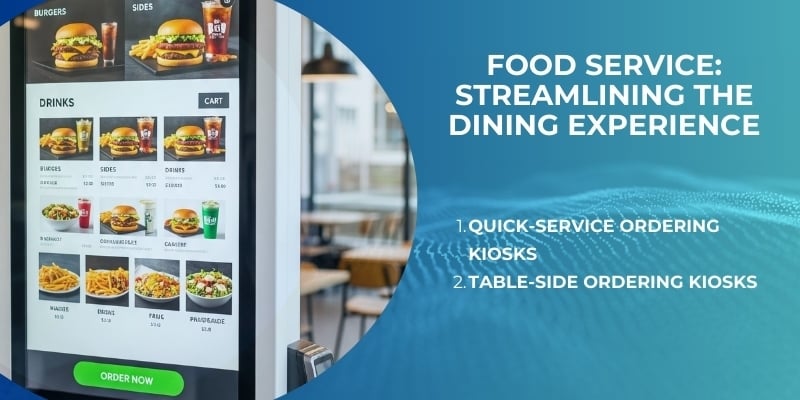
Restaurants utilize kiosks to improve order accuracy, increase average transaction value through upsell prompts, and redefine service.
- Quick-Service Ordering Kiosks: McDonald’s “Experience of the Future” initiative centers on self-ordering kiosks. These allow for extensive meal customization, promote combo upgrades, and facilitate cashless payments, directly boosting order value and kitchen efficiency.
- Table-Side Ordering Kiosks: Applebee’s nationwide deployment of Ziosk tablets lets diners browse menus, place orders for food and drinks, play games, and pay their bill directly at the table, improving table turnover and guest satisfaction.
Banking: Automating Routine Financial Transactions
Banks deploy kiosks to handle high-volume, simple tasks, allowing staff to focus on complex advisory services and improving in-branch flow.
- Smart ATM Kiosks: Chase Bank offers advanced ATMs that go beyond cash withdrawal. Customers can deposit cash and checks with instant verification, perform cardless withdrawals using their mobile app, and transfer funds, functioning as a 24/7 mini-branch.
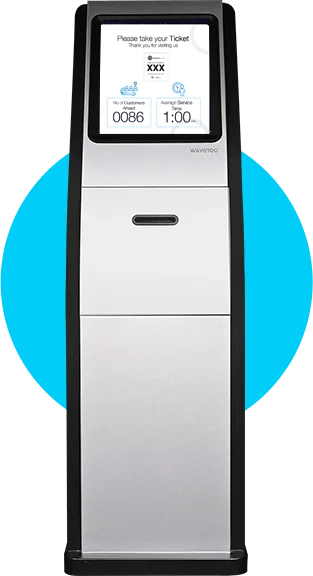
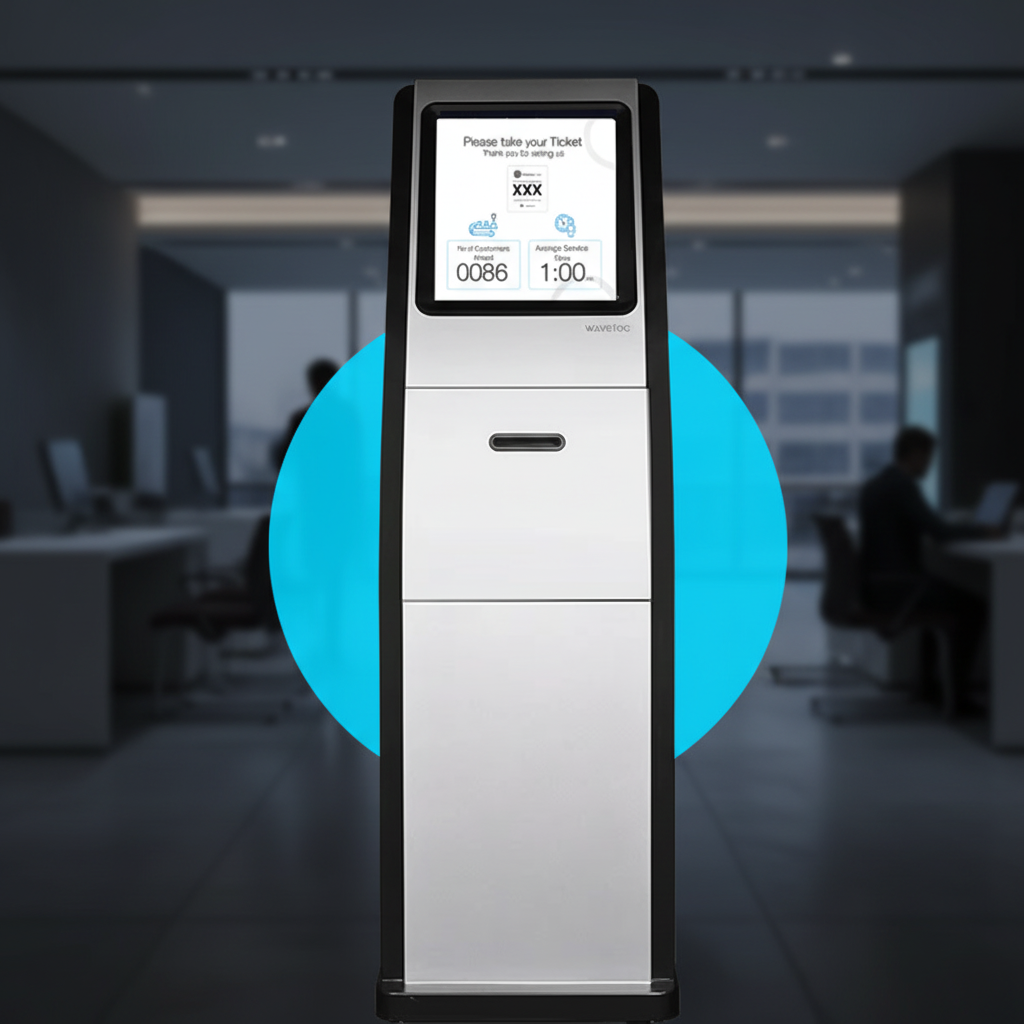
- Branch Queue & Service Kiosks: A standard in banks worldwide, these customer check-in kiosks allow clients to select their service needs, print a queue ticket, and are automatically routed to the appropriate teller or advisor, ensuring an orderly and transparent waiting experience.
Healthcare: Managing Patient Intake and Care
Healthcare facilities use kiosks to streamline administrative processes, improve data accuracy, and direct patient flow efficiently.
- Patient Check-In Kiosks: Networks like Kaiser Permanente use these widely. Patients verify their identity, update personal and insurance information, and pay co-pays electronically, reducing front-desk congestion and minimizing errors.
- Pharmacy Pickup Kiosks: Cape Cod Hospital uses the InstyMeds automated dispensing kiosk. After an e-prescription is sent, patients can securely retrieve their medication from a locker 24/7 after completing ID verification at the kiosk.
Transportation: Facilitating High-Volume Passenger Flow
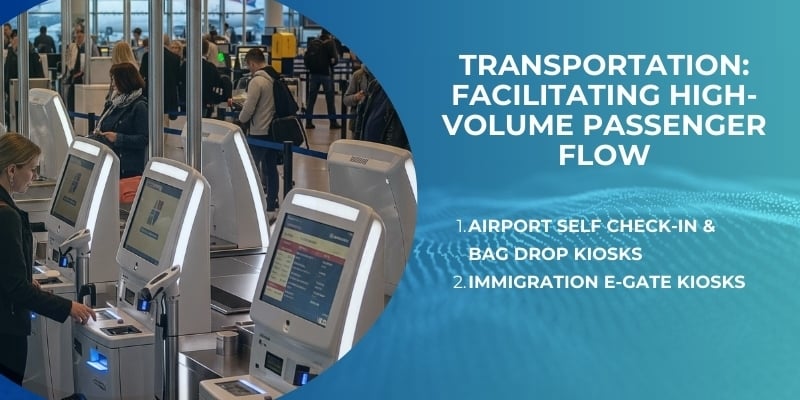
Airports and transit hubs rely on kiosks for efficient, reliable passenger processing, which is critical for operational success.
- Airport Self Check-In & Bag Drop Kiosks: Airlines like United Airlines and Delta provide robust kiosks worldwide. Passengers can check in, select seats, print boarding passes and bag tags, moving directly to bag drop, which is a cornerstone of modern airport queue reduction.
- Immigration e-Gate Kiosks: The U.S. Customs and Border Protection (CBP) Automated Passport Control (APC) kiosks allow eligible travelers to scan their passport, complete a customs declaration, and proceed quickly through immigration at major international airports.
Hospitality: Modernizing the Guest Arrival Experience
Hotels and event venues use kiosks to offer guests a quick, contact-friendly, and modern service alternative.
- Hotel Self Check-In Kiosks: Tech-forward brands like YOTEL have this at their core. Guests can confirm reservations, provide payment, and have their room key card encoded and dispensed by the kiosk in minutes, often without front-desk interaction.
- Event Ticketing Kiosks: AMC Theatres uses self-service kiosks in lobbies. Customers can purchase tickets, scan QR codes from mobile reservations to print physical stubs, and bypass the traditional box office line.
Government & Public Services: Extending Access and Efficiency
Government agencies leverage kiosks to make essential services more accessible and reduce in-person wait times.
- DMV Self-Service Kiosks: The California DMV places kiosks in field offices and retail partner locations. Residents can perform high-volume transactions like vehicle registration renewals independently, freeing staff for complex services and dramatically cutting office wait times.
- Public Feedback Kiosks: Airports like Kraków Airport use HappyOrNot terminals. These simple “smiley face” kiosks collect instant customer sentiment at specific touchpoints, providing management with real-time kiosk analytics on restroom cleanliness or security wait times.
Education: Serving Campus Communities

Universities and libraries deploy kiosks for wayfinding, information, and asset management across large campuses.
- Library Self-Checkout Kiosks: The Seattle Public Library system uses self-service kiosks from providers like ScanEZ. Patrons can check out materials, place holds, and manage accounts independently, allowing librarians to focus on research support and programs.
- Campus Wayfinding Kiosks: Large university campuses use interactive directory kiosks. Visitors and students can search for building locations, office directories, and get step-by-step maps, effectively acting as a wayfinding kiosk for the entire grounds.
Package & Parcel Management: Solving the Last-Mile Challenge
The e-commerce boom has driven the need for automated, secure package pickup and drop-off solutions available outside business hours.
- Automated Package Locker Kiosks: Amazon Hub Lockers are placed in apartment buildings, grocery stores, and transit stations. Customers select the locker option at checkout and later retrieve their package using a unique code, solving the problem of missed deliveries. Companies like InPost provide similar networks for various carriers.
Marketing & Engagement: Capturing Attention and Data
These kiosks blend advertising with interactive engagement, turning passive viewers into active participants.
- Interactive Product Explorer Kiosks: Sephora’s Color IQ kiosk is a prime example. It scans a customer’s skin tone to find perfect foundation matches across all brands, then displays the products, reviews, and allows users to email the list, driving sales and data collection.
- Photo Booth & Social Share Kiosks: These are staples at major events and retail activations. For instance, at the 2023 SXSW Conference, numerous branded photo booth kiosks allowed attendees to take themed pictures, instantly share them on social media via a QR code download, and capture leads for follow-up marketing campaigns.
Industrial & Workplace: Ensuring Safety and Tracking Operations
In industrial settings, kiosks are critical for compliance, training, and maintenance logging in harsh environments.
- Safety Training & Compliance Kiosks: Manufacturing plants and oil and gas facilities use ruggedized kiosks. Workers complete mandatory safety briefings, acknowledge new protocols, and log safety observations directly on the floor, ensuring compliance and creating a digital audit trail.
- Work Order/Status Kiosks: On factory floors, maintenance teams use dedicated kiosks to log equipment failures, check the status of repair tickets, and update job completion notes, streamlining workflow and asset management.
Visitor Management: Securing and Screening Access
Corporate offices and secure facilities use kiosks to professionally screen guests and control site access.
- Corporate Visitor Management Kiosks: Common in corporate headquarters and tech campuses. A visitor checks in by selecting their host from a directory and scanning their driver’s license for ID verification. The kiosk prints a temporary badge and automatically notifies the host of their guest’s arrival via email or SMS.
Telecommunications & Utilities: Facilitating Instant Services
These sectors use kiosks to provide instant, accessible service for common transactions like payments and activations.
- SIM Purchase & Top-Up Kiosks: Common in international airports and urban centers worldwide. Travelers can purchase local SIM cards, select a data plan, and complete ID verification (eKYC) on the spot to activate service immediately, all through a self-service touchscreen kiosk.
Conclusion
These diverse interactive kiosk examples demonstrate that the technology’s power lies in solving specific, high-frequency user pain points.
Whether enabling queue reduction at a California DMV, driving upsell prompts at McDonald’s, or ensuring safety compliance on a factory floor, a successful kiosk deployment hinges on understanding user needs.
The business case is clear: a strong kiosk ROI through operational efficiency, enhanced data from kiosk analytics, and improved customer satisfaction.
For implementation, success requires intuitive design with accessibility (ADA) in mind, reliable kiosk software with remote device management, and seamless backend payment integration.
When executed as part of a holistic omnichannel experience, interactive kiosks become indispensable tools for building a modern, efficient, and user-centric business.
BOOK A FREE DEMO