Modern airports are transforming from concrete spots into dynamic experience hubs. This evolution is powered by a shift from static signs and crackling loudspeakers to intelligent, connected digital signage.
These smart display systems are improving how passengers navigate, receive information, and engage with the airport environment, turning potential stress points into opportunities for clarity and comfort.
This digital transformation is accelerating globally. The U.S. airport digital signage system market is projected to grow steadily from 2025 to 2031, driven by the rapid deployment of indoor and outdoor LCD and LED displays.
This growth highlights a critical trend: airports are investing in comprehensive digital signage solutions to modernize infrastructure and meet rising traveler expectations for seamless, informed journeys.
-
Flight Information Display Systems (FIDS)
The most critical and visible form of airport digital signage is the Flight Information Display System (FIDS). These are the digital boards that passengers rely on from the moment they enter the terminal.
Modern FIDS do much more than list flight numbers and times; they are the central nervous system for real time travel updates.
These systems integrate directly with airline and airport operational databases to show live arrival and departure data, last minute gate changes, delay codes with explanations, and even connecting gate information.
Their role in passenger communication is indispensable, reducing the frantic rush to information desks and providing a single, trusted source of truth.
Detailed Functions and Benefits
These integrated systems transform raw data into reliable passenger guidance through several key technical and operational features.
Real Time Data Integration
Modern FIDS pull data directly from the Airport Operational Database (AODB) and airline systems, ensuring that the information on every screen, from the main concourse to a remote gate, is synchronized and accurate within seconds of a change being logged.
Multi Format Displays
These systems power a variety of screen types across the airport. This includes large, central departure boards in check-in halls, smaller LCD displays at individual gates, and even integrated screens within airline lounges, all showing contextually relevant information.
Enhanced Content Features
Beyond basic flight status, advanced FIDS can display weather maps affecting routes, security wait times, detailed baggage claim information for arrivals, and symbols indicating special services (like unaccompanied minors or passengers requiring assistance).
Reducing Passenger Anxiety
The constant, clear flow of information from these displays is a primary method for managing passenger stress. By making the unknown known, FIDS directly address the core of travel anxiety.
This principle is explored in depth regarding how digital signage lessens perceived wait times and boosts sales by managing customer expectations and perceptions effectively, proving that information transparency is key to a positive experience.
-
Digital Wayfinding and Navigation Screens
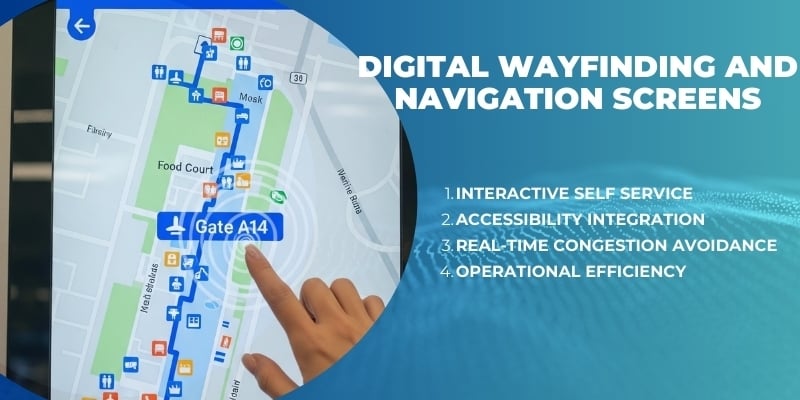
Large, multi terminal airports can feel like a maze. Digital wayfinding and navigation screens are the modern solution to this age old problem.
Moving far beyond static “You Are Here” maps, these interactive kiosks allow travelers to input a flight number, gate, or amenity like a specific restaurant or lounge. The screen then generates a personalized, step by step route with clear visuals and estimated walking times.
Detailed Functions and Benefits
These interactive tools empower passenger independence and optimize terminal flow through a combination of intuitive design and smart integration.
Interactive Self Service
Passengers can touch the screen to search for destinations by category (restrooms, prayer rooms, specific airline lounges, charging stations) or by name. The system provides a visual path highlighting turns and landmarks.
Accessibility Integration
High quality wayfinding systems include features for visually impaired passengers, such as screen reader compatibility or options to output directions in audio format through a headphone jack, supporting inclusive travel.
Real Time Congestion Avoidance
When integrated with airport sensors, these systems can suggest alternative, less congested routes to a gate, helping to distribute foot traffic evenly throughout the terminal and improve overall flow.
Operational Efficiency
This technology drastically reduces congestion caused by lost passengers and minimizes missed connections. It also significantly decreases the volume of repetitive directional questions asked at information desks, allowing staff to focus on more complex customer service issues.
-
Airport Video Walls for Immersive Branding
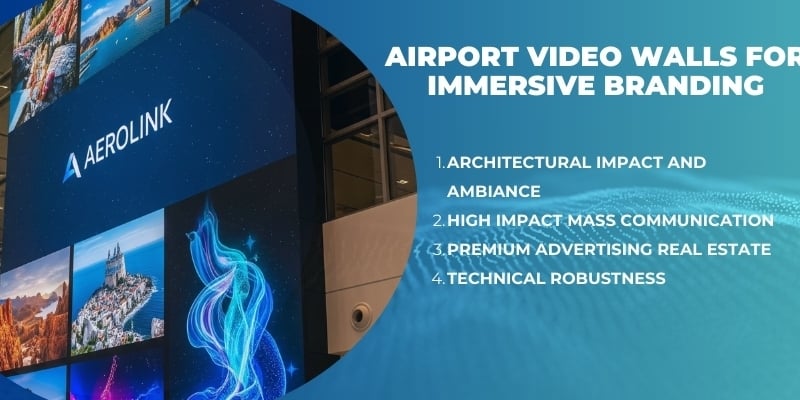
For creating awe and delivering mass communication, nothing compares to an airport video wall. These large scale LED display installations are more than just big screens; they are immersive visual experiences that define the character of a terminal.
They are used to showcase stunning destination marketing videos, high impact brand campaigns for airlines and luxury goods, live global news or sports, and captivating digital art.
Detailed Functions and Benefits
Video walls serve a dual purpose as both spectacular brand canvases and critical operational tools for mass communication.
Architectural Impact and Ambiance
A well placed video wall serves as a central visual landmark, often becoming a passenger photo opportunity. It can soften the feel of large, impersonal spaces and create a sense of place, perhaps by displaying serene nature scenes that reduce travel stress.
High Impact Mass Communication
During normal operations, a master video wall can serve as an ultra clear, centralized flight information hub visible from across a vast departure hall.
In times of widespread disruption, it becomes an indispensable tool for mass communication, displaying clear, calming instructions and unified updates to thousands of passengers at once, preventing misinformation and panic.
Premium Advertising Real Estate
The sheer scale and visual power command attention, making video walls the most premium advertising space in an airport. Brands pay a premium for the guaranteed high dwell time viewership and the association with a high quality, immersive showcase.
Technical Robustness
Specialized airport video walls are engineered for extreme environments, offering exceptional brightness to combat direct sunlight and robust reliability for 24/7 operation.
For airports looking to make a bold statement, investing in a dedicated video wall solution is a transformative step toward creating a modern and memorable passenger environment.
-
Retail & Duty-Free Advertising Displays
Airport retail zones are highly competitive, and digital signage has revolutionized how brands connect with a captive, often high spending audience.
Static posters are replaced by dynamic digital displays that can promote limited time duty free deals, highlight new product launches from luxury brands, or showcase exclusive airport offers.
Detailed Functions and Benefits
This digital ecosystem drives commercial success by delivering the right promotion to the right passenger at the perfect moment.
Dynamic Content Scheduling
Store managers or central retail operators can schedule campaigns to run at specific times of day. Morning content might promote skincare and coffee, while evening content highlights spirits, watches, and perfumes.
Contextual and Targeted Advertising
The power of this travel retail digital signage lies in its agility and targeting. Screens near gates for flights departing to Asia might display promotions for popular Asian luxury brands, while screens in the European departures area feature different products.
Dwell Time Monetization
This ability to target “dwell time advertising” is incredibly valuable. In fact, U.S. transportation hubs generate premium ad revenue through digital signage, targeting high income travelers with engaging dwell time content.
A passenger waiting near a gate is a captive audience, and dynamic content is far more likely to capture their interest than a static poster.
Influencing Purchasing Decisions
These screens do not just advertise; they enhance the retail experience by providing entertainment and information, such as short videos on how a perfume is made or the heritage of a watchmaker.
This directly influences purchasing decisions at the point of sale, which is a key aspect of how digital signage impacts customer behaviour in commercial settings by creating desire and conveying brand value quickly.
-
Queue & Boarding Management Displays
Waiting is an inevitable part of air travel, but digital signage makes it far more manageable. Queue management screens at check-in counters, security checkpoints, and immigration lines display live wait times and direct passengers to the next available agent or lane.
Detailed Functions and Benefits
These displays create order and transparency, transforming waiting from a passive frustration into a managed, predictable process.
Transparency and Fairness
At security, large overhead displays show estimated wait times for different lanes, allowing passengers to choose and setting a clear expectation. This transparency reduces anxiety and perceived wait times, as studied in resources on how digital signage lessens perceived wait times.
Efficient Passenger Routing
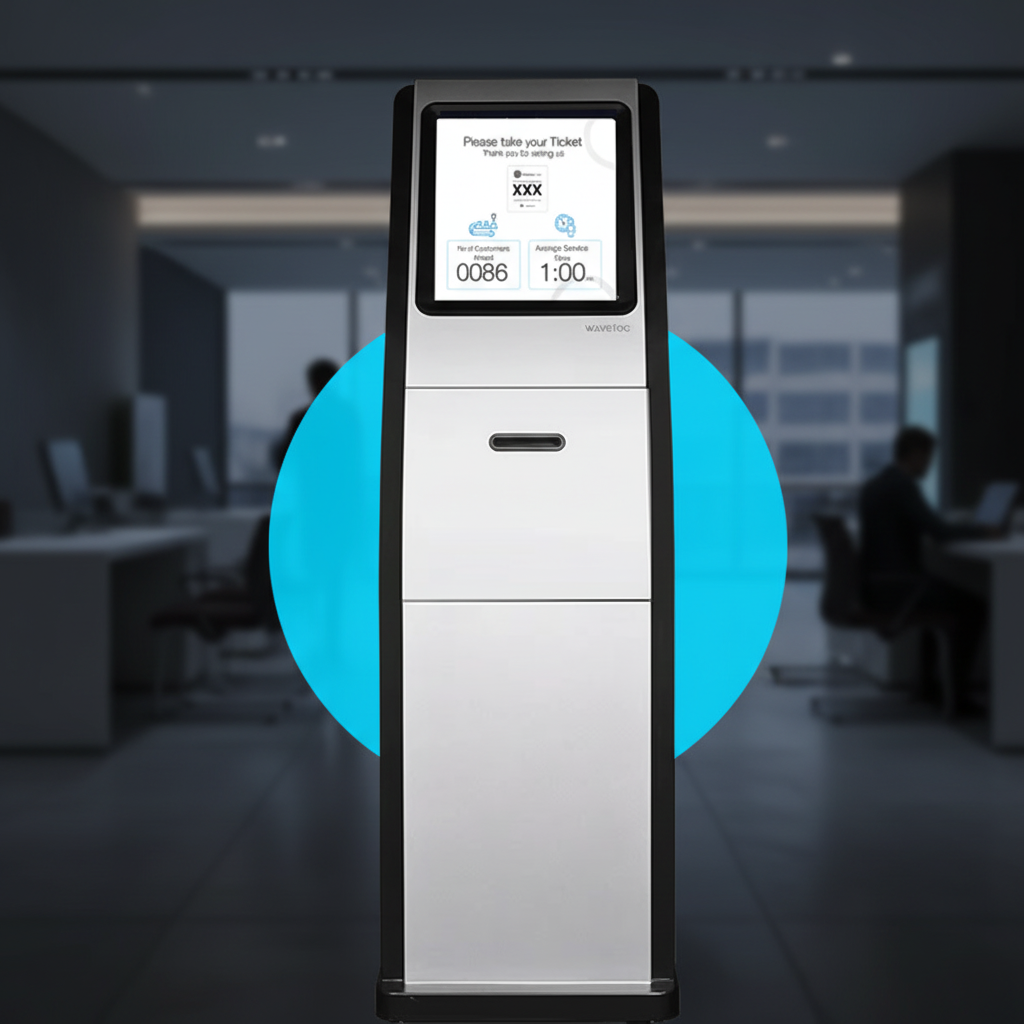
Integrated with a ticketing system, displays at check in can call the next passenger by ticket number to a specific desk, creating an orderly queue and preventing crowding at the counter area.
Streamlined Boarding Process
At the gate, boarding gate displays have evolved from simple signs to dynamic communication tools.
They clearly show boarding group sequences, timings, and any special instructions (e.g., “Rows 40-50 now boarding”), streamlining the often chaotic boarding process. They can also display real time messages like “Final Call” or “Gate Closing” with high visibility.
Integrated System Benefits
These displays are often the most visible component of a broader queue management system, creating a cohesive flow that guides passengers smoothly from curb to cabin.
This integration not only improves the passenger experience but also significantly boosts operational efficiency for airport and airline staff, allowing them to manage resources based on real time demand.
-
Lounge & VIP Area Digital Displays

Airport lounges are sanctuaries for premium travelers, and digital signage is key to delivering the personalized, high touch experience they expect. Upon entry, digital screens can display personalized welcome messages for elite status members or specific airlines.
Detailed Functions and Benefits
Within these exclusive spaces, digital displays curate a tailored environment of comfort, convenience, and timely information.
Personalized Flight Information
Inside, dedicated displays show a tailored list of flight information for all departing flights relevant to lounge guests, ensuring they never miss a boarding call. This is often more convenient than checking a phone.
Dynamic Service Menus
Digital menu boards can showcase the day’s culinary offerings, including images, dietary information (gluten-free, vegan icons), and pairing suggestions. These can be updated instantly when a new dish is available or out of stock.
Promoting Premium Services
Screens can promote partner services, such as spa bookings, shower availability, chauffeur services, or exclusive shopping offers from nearby duty-free stores, directly contributing to additional revenue.
Ambiance and Brand Reinforcement
Ambient screens can display calming art, news from a financial network, or serene destination footage, reinforcing the lounge’s brand as a place of relaxation and productivity.
This focused use of airport lounge signage enhances comfort, convenience, and the sense of exclusivity, reinforcing the value of loyalty programs and premium tickets. It turns the lounge from a simple waiting room into a digitally integrated, service oriented haven.
-
Safety & Emergency Notification Screens
In critical situations, clear and immediate communication is essential. Digital signage networks become necessary tools for safety and emergency notification.
Unlike static signs or hard to hear PA announcements, digital screens can instantly broadcast high visibility, multi language safety alerts, evacuation route maps, and real time instructions during events like security incidents, weather emergencies, or fire alarms.
Detailed Functions and Benefits
In an emergency, this network transforms into a unified, authoritative communication channel designed for clarity and rapid public guidance.
Instant Override Capability
In an emergency, authorized personnel can override all scheduled content on every screen in a specific zone or the entire airport with a single command, ensuring the emergency message is the only thing seen.
Visual Clarity for All
Their visual nature ensures the message reaches non native speakers and hearing impaired individuals. Using universal symbols (like a running man for evacuation) alongside text makes instructions understandable to a global audience.
Dynamic Guidance
In a complex evacuation, screens can be updated to show if a primary exit route becomes unsafe, dynamically guiding passengers to alternative exits, something impossible with static signage.
Reliability is Critical
These systems can be triggered manually or automatically integrated with airport fire and security systems, ensuring rapid response.
The durability and reliability of professional-grade displays, such as those in the Donatello Vertica range, are essential for this application, as they must function flawlessly 24/7 to ensure passenger and staff safety under any conditions.
-
Arrival & Baggage Claim Displays
The passenger experience does not end at landing. The arrivals hall and baggage claim area are often scenes of congestion and uncertainty. Digital baggage claim displays solve this by providing clear, real time information.
Large screens list arriving flights and dynamically assign them to specific carousels, often with visual icons indicating when baggage from a particular flight has started to flow.
Detailed Functions and Benefits
This focused signage transforms the often chaotic arrivals process into an organized and predictable conclusion to the journey.
Efficient Crowd Management
By clearly listing which carousel serves which flight, these displays prevent large crowds from forming around a single belt, distributing passengers efficiently across the baggage hall.
Status Updates
Icons or text next to each flight listing can change from “Flight Landed” to “Baggage in Transit” to “Baggage on Belt,” giving passengers a clear idea of the process and reducing impatient questioning of staff.
Integrated Welcome and Guidance
Other displays in the arrivals area can guide travelers toward ground transportation options (taxi, ride-share, train), parking shuttles, rental car counters, and hotel courtesy phones. Some may even display local weather, currency exchange rates, or welcome messages.
Improving the Final Impression
This application of passenger experience signage at the final stage of the airport journey reduces frustration, improves crowd flow, and helps travelers transition smoothly to their next destination. A calm, organized arrival experience leaves a lasting positive final impression of the airport.
-
Outdoor LED & Lane Control Signage
The digital transformation extends beyond the terminal walls. Outdoor airport LED signage is crucial for managing the complex vehicle flow around airport precincts. Large, high brightness LED displays guide drivers to different terminals, parking garages, rental car returns, and pickup zones.
Detailed Functions and Benefits
This exterior network manages the critical first and last mile of the passenger journey, ensuring safety and efficiency from the roadway.
Real Time Parking Management
Parking guidance systems use displays at entrances and throughout garages to indicate the number of available spaces on each level in real time, drastically reducing the time cars spend circling and lowering vehicle emissions within enclosed structures.
Dynamic Lane Control
At curbside, lane control displays above pickup and drop off zones can change messages in real time. They can enforce timed stops (“No Parking – Active Loading Zone“), direct specific types of traffic (e.g., “Commercial Buses Only,” “Ride-Share Pickup“), and display safety reminders (“Do Not Leave Vehicle Unattended“).
Traffic Congestion Reduction
By providing clear, long-distance visual instructions, these signs help prevent last-minute lane changes and confusion, which are primary causes of traffic backups on airport roadways.
Durability in Harsh Conditions
This ecosystem of outdoor displays is essential for maintaining orderly, efficient, and safe vehicle movement, completing the seamless journey that begins the moment a passenger approaches the airport.
Specialized LED displays designed for all weather conditions, with high brightness for sunlight readability and enclosures, are critical for this demanding outdoor environment.
-
Sustainability & Green Signage Initiatives
Modern airports are increasingly focused on sustainability, and digital signage supports these green initiatives in several key ways. Firstly, modern energy efficient displays, particularly LED panels, consume significantly less power than older signage and lighting solutions.
Detailed Functions and Benefits
Beyond communication, a modern digital signage strategy actively contributes to an airport’s environmental and operational sustainability goals.
Reduced Material Waste
A centralized Content Management System (CMS) allows for remote updates and scheduling, eliminating the waste generated by printing, shipping, and disposing of thousands of paper posters, brochures, and static ads every month. This move to a paperless communication model is a major step toward reducing an airport’s carbon footprint.
Smart Power Management
Advanced digital signage systems can be programmed to automatically dim screen brightness during low-traffic nighttime hours or power down completely when the terminal is closed, conserving significant energy.
Promoting Green Messages
The signage network itself can be used to communicate the airport’s sustainability efforts to the public, such as showcasing carbon offset programs, recycling initiatives, or the environmental benefits of using public transport to access the airport.
Contributing to Broader Goals
Finally, the efficiency gains from digital wayfinding (less walking in wrong directions) and optimized queue management (reduced idle time for passengers and vehicles) contribute to broader operational sustainability goals.
Adopting an eco-friendly airport signage strategy is not just an operational upgrade; it’s a public commitment to environmental responsibility that aligns with the values of modern travelers and regulators.
Why Airports Are Investing Heavily in Digital Signage
The global push toward comprehensive airport digital signage is driven by a powerful combination of passenger demand and operational necessity.
The primary driver is the need for enhanced passenger satisfaction; clear information and smooth navigation are now baseline expectations for travelers who compare experiences across global hubs.
Key Investment Drivers:
- Operational Efficiency and Cost Savings: These systems deliver tangible efficiency, automating routine communications (like gate changes), which reduces staffing burdens at information desks. Optimizing crowd flow through wayfinding and queue management minimizes delays and improves throughput at security and retail areas.
- Significant Revenue Generation: Commercially, digital networks unlock substantial non-aeronautical revenue. They provide a platform for high-impact, targeted advertising that commands premium rates from global brands. The ability to charge for advertising space on a network of screens creates a valuable new income stream.
- Future Proofing and Flexibility: Digital infrastructure provides unmatched flexibility. Airports can adapt messaging instantly for marketing campaigns, special events, or emergencies. This agility is far superior to the static, physical world of printed signs.
- Enhanced Safety and Compliance: As discussed, the role in crisis communication and safety compliance is a major factor, helping airports meet stringent regulatory requirements for passenger safety information.
This blend of improved passenger experience, operational ROI, new revenue streams, and enhanced safety makes digital signage a strategic, long term investment. It is viewed not as an expense, but as critical infrastructure for a competitive and efficient 21st century airport.
FAQs
What is airport digital signage used for?
Airport digital signage is a network of digital displays used to communicate real time information to passengers and staff.
Its primary uses include displaying flight details, providing interactive wayfinding, managing queues at security and gates, broadcasting safety alerts, promoting retail and dining offers, and enhancing the overall ambiance with branding and entertainment content.
How does digital signage improve passenger experience?
It reduces stress and confusion by providing clear, real time information on flights, gates, and waits. Interactive maps eliminate the fear of getting lost. Engaging content on screens makes waiting times feel shorter.
By delivering personalized and immediate information, it creates a smoother, more predictable, and less anxious journey from curb to gate.
What types of airport screens are most effective?
The most critical are Flight Information Display Systems (FIDS) and digital wayfinding kiosks, as they address core passenger needs. For revenue and branding, large format video walls and retail advertising displays are highly effective.
For operational flow, queue management screens at security and boarding are indispensable. The “most effective” type depends on the specific location and goal within the terminal ecosystem.
Can digital signage increase retail sales in airports?
Yes, significantly. Digital displays in retail zones can promote time sensitive duty free deals, highlight luxury products with captivating videos, and adapt offers based on departing flight destinations.
By capturing passenger attention during dwell time with dynamic content, these displays are proven to drive impulse purchases and increase overall retail spend per passenger.
How is airport signage managed remotely?
A centralized Content Management System (CMS) allows airport operators and approved partners to control the entire network from a single interface.
They can schedule content, make real time updates (like emergency alerts), monitor screen health, and tailor messages for specific terminal zones or times of day, all without needing physical access to each display.
Conclusion
From guiding a passenger’s first step into the terminal to announcing their final baggage carousel, airport digital signage is the invisible hand that orchestrates a smoother, more engaging travel experience.
These ten examples illustrate how smart displays enhance operational efficiency, drive commercial revenue, ensure safety, and, most importantly, restore a sense of calm and control to the modern traveler.
The transition from static signs to dynamic digital networks is no longer a luxury but a fundamental requirement for airports aiming to be competitive, efficient, and passenger centric.
For airport operators ready to modernize their communication infrastructure and elevate every aspect of the traveler’s journey, the path forward is clear: invest in a comprehensive, integrated airport digital signage strategy today.
BOOK A FREE DEMO