Choosing the right signage for your business is a critical decision that impacts customer engagement, brand perception, and your bottom line. The core dilemma often comes down to a choice between traditional static signage and modern digital signage.
Each has distinct advantages, and the best option depends on your specific goals, audience, and operational needs. Understanding this signage comparison is the first step toward making an informed investment.
To set the stage, research indicates that digital signage captures up to 400% more views than static signs, highlighting a fundamental difference in audience engagement from the outset.
This guide will break down the key factors to help you decide between static vs digital signage, which solution aligns with your business signage strategy.
What Is Static Signage?
Static signage refers to any form of printed, physical visual communication that displays fixed information. This category includes traditional materials like posters, billboards, banners, foam-core boards, vinyl wraps, and printed menus.
The message, image, or design is permanently applied to a material and cannot be changed without physically replacing the entire sign. These are considered traditional signage solutions, relying on one time production and installation.
Their strength lies in simplicity, wide availability, and familiarity, making them a staple for permanent information, basic branding, and one time announcements where the content is intended to last for months or years without alteration.
What Is Digital Signage?
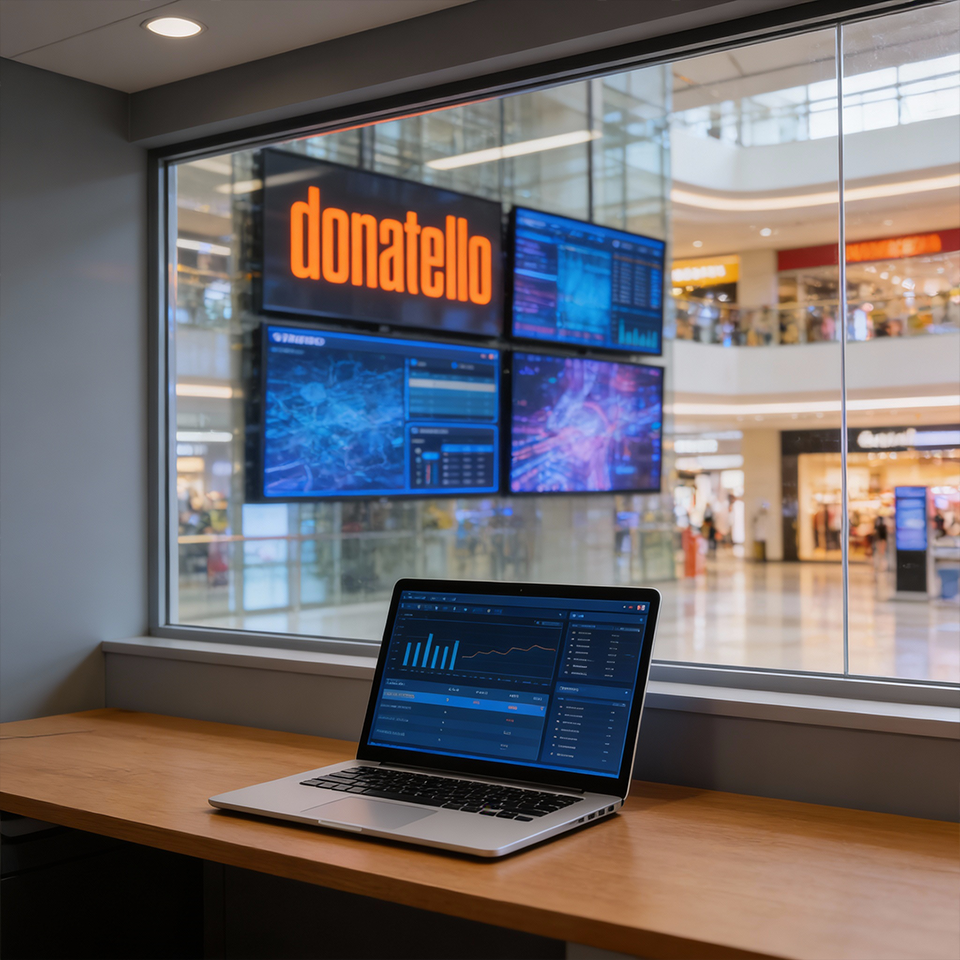
Digital signage is a dynamic, screen based communication system that uses technologies like LCD, LED, or projection to display multimedia content. Controlled by specialized software, it can show videos, animations, images, social media feeds, and real time data (like news or weather).
Unlike its static counterpart, the content on a digital display system is easily updated and managed remotely from a central dashboard, allowing for instant changes, scheduled campaigns, and interactive features. This makes it a powerful tool for timely communications, targeted marketing, and enhancing customer experience.
For businesses looking to modernize their communications, a comprehensive digital signage solution provides the infrastructure for this flexible approach.
Static vs Digital Signage – Key Differences
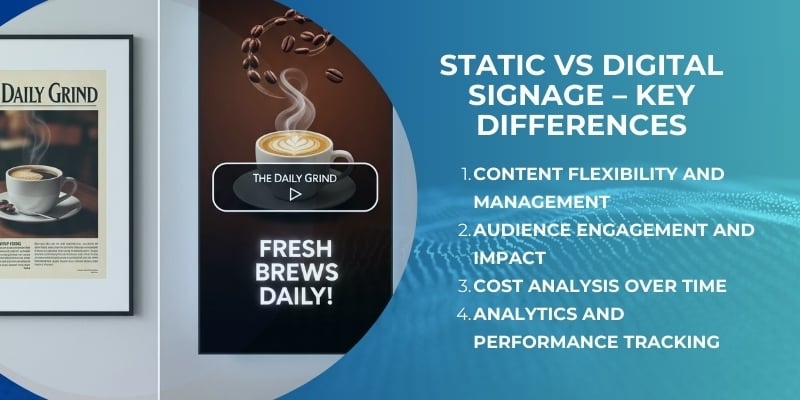
To make an informed choice, it’s essential to compare static vs digital signage across several operational and strategic dimensions. This digital signage vs static signage comparison highlights where each excels and where limitations arise.
-
Content Flexibility and Management
This is the most significant differentiator. Static signage has fixed content. Any change, whether correcting a typo or promoting a new sale, requires designing, printing, and physically installing a new sign. This process costs both time and money for every update.
Digital signage, in contrast, offers unparalleled flexibility. Content can be changed instantly across an entire network of screens from a single computer. You can schedule different content to play at different times of day, react to real time events, or even integrate live data feeds.
This allows for A/B testing of promotions, timely announcements, and seasonal campaigns without any physical waste or labor.
-
Audience Engagement and Impact
The ability to capture and hold attention varies dramatically. Static signage relies on a single, compelling visual and text layout. While well designed prints can be effective, they are passive and can become “invisible” to regular audiences over time due to familiarity.
Digital signage is inherently more engaging. Motion, sound, and vibrant visuals naturally draw the human eye. The ability to tell a story through video or animation creates a deeper emotional connection with the brand. This leads to superior signage engagement, making messages more memorable and impactful, which is why digital solutions are considered premier attention grabbing displays.
-
Cost Analysis Over Time
The financial picture requires a long term view. Static signage typically has a lower upfront cost per unit. You pay for design, materials, and printing. However, the total cost of ownership can grow with each required update, as you incur recurring design and printing fees, plus labor for installation and removal.
Digital signage involves a higher initial investment for hardware (screens, media players) and software. However, the long term content update costs are minimal. There are no printing fees; you only invest in digital content creation. Over several years, the ability to run countless campaigns on the same screen often leads to a lower cost per impression and a better overall signage ROI.
-
Analytics and Performance Tracking
Measuring effectiveness is simple with one option and nearly impossible with the other. With static signage, you have no direct way to measure how many people saw it, looked at it, or acted on it. Success is gauged indirectly through overall sales or foot traffic.
Digital signage platforms often include signage analytics. You can gather data on content performance, such as dwell time (how long people watch), interaction rates for touchscreens, and even correlate campaigns with sales data. This allows for true performance tracking and data driven optimization of your messaging strategy.
Static vs Digital Signage in Different Industries
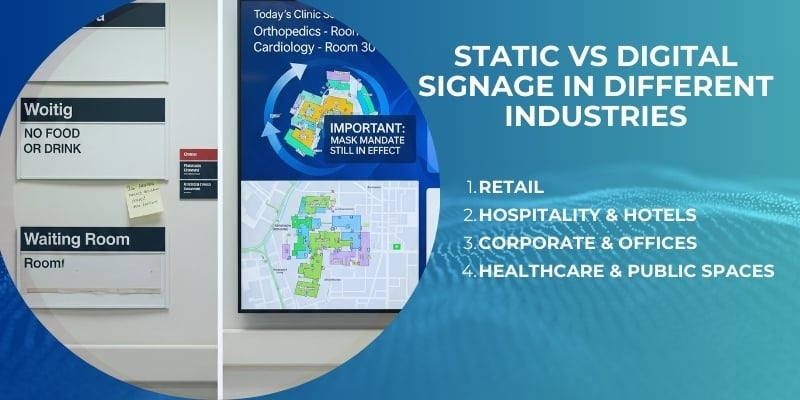
The ideal choice between static and digital often depends on the industry’s specific communication needs and customer interaction patterns.
-
Retail
In retail, signage drives promotions and influences buying decisions. Static signage is common for basic price tags, permanent brand walls, and long term aisle markers. However, for promotions, digital signage is transformative.
Dynamic screens near entrances or checkout lines can showcase flash sales, highlight new arrivals with videos, and manage queues. The impact is clear: retailers using digital signage achieve up to 32 percent sales growth by making promotions impossible to ignore.
-
Hospitality & Hotels
Hotels use signage for wayfinding, promotions, and enhancing guest experience. Static signage is often used for permanent room numbers and fire escape plans.
Digital signage, or hospitality signage, excels in dynamic areas. Lobby video walls create ambiance, restaurant digital menus can update instantly, and elevator screens promote the spa, increasing guest spending and satisfaction.
-
Corporate & Offices
For internal communications and branding, corporate signage needs vary. Static signage works for permanent safety signs and company value statements.
Digital signage in lobbies, cafeterias, and hallways is superior for sharing real time company news, celebrating employee achievements, displaying meeting room schedules, and reinforcing culture with dynamic content.
-
Healthcare & Public Spaces
Clarity and timely information are critical. Static signage is necessary for permanent regulatory information and basic directories.
Digital signage provides immense value in healthcare settings for live wayfinding, reducing patient stress, displaying wait times, and broadcasting urgent health alerts or educational content in waiting areas.
ROI Comparison – Static vs Digital Signage
Evaluating the signage return on investment requires looking beyond the price tag. Static signage ROI is limited to the lifespan of a single message. Its value diminishes if the information becomes outdated.
Digital signage ROI grows over time. The investment pays back through increased sales from targeted promotions, improved operational efficiency (like reduced perceived wait times), and lower long term communication costs.
The ability to measure engagement also means you can continuously improve content performance, ensuring your investment yields better results.
The behavioural impact is significant, as studies into how digital signage impacts customer behaviour show it directly influences purchasing decisions and brand perception.
When Static Signage Still Makes Sense
A balanced view acknowledges that static signage remains the best choice in specific scenarios. Its traditional signage benefits shine where content is permanent, budgets are extremely tight, or conditions are unsuitable for electronics.
Key static signage use cases include:
- Temporary, short term events like a one day sale where a simple poster suffices
- Budget limited campaigns for small businesses taking their first marketing steps
- Low update environments where the message will not change for years, such as mandatory safety signs, basic building directories, or permanent exterior branding.
When Digital Signage Is the Better Choice
For businesses focused on growth, agility, and measurable marketing, digital signage is overwhelmingly the superior option. The digital signage benefits deliver tangible value where it matters most.
- It is the better choice when you require frequent content updates for menus, promotions, or events.
- It excels at promotions and upselling with dynamic visuals that drive impulse purchases.
- It is essential for maintaining multi location consistency, as you can update all sites simultaneously from headquarters.
- It is invaluable for data driven marketing, allowing you to test and optimize campaigns based on analytics.
Crucially, it enhances customer experience in waiting areas, a proven tactic to lessen perceived wait times and boost sales.
How to Choose Between Static and Digital Signage
Use this simple decision framework to evaluate your needs. Consider these points to choose digital signage or confirm static is sufficient.
- Budget & Timeline: What is your upfront capital vs. long term operational budget?
- Content Update Frequency: Will your message change weekly, monthly, or yearly?
- Audience & Behavior: Are you in a high traffic area where engagement is key?
- Measurement Needs: Do you need data to prove your signage’s effectiveness?
- Long Term Scalability: Do you plan to expand to multiple locations or screens?
If your answers lean toward frequent updates, high engagement, and measurable growth, digital signage is the strategic choice. If your needs are one time, permanent, and cost constrained, static may suffice.
FAQs
What is the difference between static and digital signage?
Static signage is physical printed material with a fixed, unchangeable message, like a poster or banner. Digital signage uses electronic screens to display dynamic, programmable content such as videos, animations, and real time information that can be updated remotely and instantly.
Is digital signage worth the investment?
Yes, for most businesses that need to communicate regularly with customers or staff. While the initial cost is higher, the long term benefits like reduced printing costs, the ability to run unlimited campaigns, increased sales from dynamic promotions, and measurable ROI make it a valuable investment for growth oriented organizations.
Does digital signage really increase sales?
Absolutely. By capturing more attention with motion and vibrant visuals, digital signage effectively promotes impulse buys, highlights high margin items, and can be updated in real time to flash sale promotions. Retail case studies consistently show it leads to a measurable uplift in transaction size and sales volume.
Can static and digital signage be used together?
Yes, a hybrid approach is very common and effective. Permanent information like brand logos, safety signs, and restroom markers can be static. Digital screens can then be used for variable content like promotions, menus, and event announcements, creating a layered and cost effective communication strategy.
Which signage type is better for small businesses?
It depends on the business model. A small boutique with rarely changing prices might start with static signs. A cafe with daily specials and a need to create ambiance would benefit greatly from even a single digital menu board. Small businesses should weigh the need for content agility against their initial budget.
Conclusion
The static vs digital signage debate does not have a one size fits all answer. Static signage serves a purpose for simple, permanent, and low budget communication needs.
However, for businesses aiming to enhance customer engagement, respond with agility to market changes, and achieve a strong return on their communication investment, digital signage is the clear strategic choice.
Its advantages in flexibility, impact, and measurable results make it an indispensable tool for modern marketing and operations.
To explore how a dynamic digital signage solution can be tailored to your specific business objectives, evaluating the right technology partner is the next logical step.
BOOK A FREE DEMO