Emergency Room Queue Management and Patient Flow
Reduce ER congestion, prioritize by triage, and keep patients informed with a secure platform for virtual queuing, check-in, calling, and analytics.

We’ve worked with some great companies


ER Patient Flow
What Effective ER Queuing Means
Emergency room queue management coordinates triage, virtual queuing, and patient updates to shorten door-to-doctor times and cut Left Without Being Seen (LWBS). The platform links self-service check-in kiosks, digital-signage calling, and real-time analytics so leaders can allocate rooms and staff by urgency and demand.
Emergency Department Challenges
Unpredictable arrivals and patchy data stretch door-to-doctor times and raise LWBS; real-time updates restore flow.
Long Queues
When arrivals spike and visibility is patchy, waits grow and more patients leave before being seen. Clear updates and connected data help teams act sooner.
Surge Demand
Unpredictable arrivals trigger boarding and bottlenecks; teams need live capacity views and urgency-based routing to keep flow moving.
Communication Gaps
Accurate wait-time updates and visible calling improve patient experience and align with hospital communication domains measured in HCAHPS.
How It Connects
Connected Patient Flow
A connected stack for arrivals, triage, routing, and discharge to reduce bottlenecks and improve the ER experience.
Virtual Queue Management
Let walk-ins and booked patients join remotely, receive SMS/WhatsApp updates, and route by triage and resource availability to balance demand and reduce congestion during surges.

Online Appointment Scheduling
Offer online and mobile booking for urgent-care slots and fast-track lanes; send reminders and pre-arrival instructions to smooth peaks and improve show rates for non-emergent flow.
Check-In Kiosk
Speed ER registration with kiosks that verify patient data, print tickets, support multiple languages/ADA needs, and hand off seamlessly to triage and calling to reduce front-end delays.
Measured Gains
KPI-driven improvements across access, throughput, and experience.
33%
Reduced average wait times
24%
Reduction in no-show rate
30%
Higher patient experience scores
Technologies That Power It
WhatsApp Queuing Solution
Let patients take a ticket, receive updates, and arrive just-in-time via WhatsApp; ideal for crowded lobbies and surge periods and non-urgent arrivals.
Mobile-Q
Patients choose location/service, get directions, and hold a mobile ticket with status updates; reduces perceived waits.
Digital Signage Solutions
Centralized patient calling, room boards, and wait-time displays for lobbies and care areas; configurable layouts and audio for clinical clarity.
Spectra Analytics
AI-powered dashboard to track important KPIs to measure operational performance.
Customer Feedback
Capture patient experience scores at discharge or via SMS to close the loop and guide service improvements without disrupting clinical work.
People Counting
Monitor entrances/exits to manage capacity and trigger messaging on signage; useful for surge/overflow governance.
Integrations
Built For Healthcare IT
Connect to leading EHRs and meet security standards across complex ED infrastructures.

Where It Fits
Set up ER Journeys by clinical priority and situation – self check-in, virtual queuing and staged calling that smooths peaks and shortens waits.
Walk-in Triage
Patients register on self-service kiosks or mobile; our queuing system prioritizes urgency, routes to clinicians, and coordinates screen-based calling.
Fast Track Minor Care
Our queuing system runs a parallel fast-track lane; self-service kiosks precheck patients, accelerating room turnover and reducing congestion significantly.
Ambulance and Trauma Intake
For critical arrivals, our queuing system reserves bays and triggers overrides; self-service kiosks capture essentials to expedite immediate stabilization.
Imaging and Labs Hand-off
Our queue management system issues return-to-care tokens and guides patients; self-service kiosks confirm preparations, streamlining diagnostics and reducing back-and-forth delays.
Multi-Site Command
A centralized queue management system sets rules and monitors KPIs; self-service kiosks standardize intake, enabling rebalancing and Emergency Department governance.
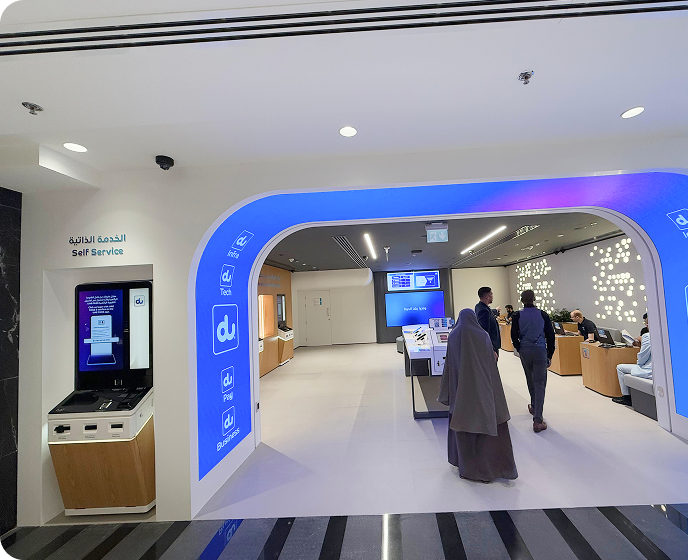
Proven In The Field
See deployments and outcomes.

20 Jan 2025
Bank of India
Reduced customer wait times by 30% using queue management and self-service kiosks.
19 Jan 2025
SBI (State Bank of India)
Streamlined branch traffic with digital signage and appointment scheduling.
18 Jan 2025
Emirates NBD
Improved customer journeys using virtual queuing and WhatsApp notifications.
Frequently asked questions
Everything you need to know about the product and billing.
By combining virtual queuing, triage-based routing, and clearer wait-time communication so fewer patients leave before evaluation. Fast-track/split-flow interventions have been associated with lower LWBS in the literature (see CJEM systematic review)
Yes. Rules can map to common ED triage levels (e.g., ESI), so high-acuity patients bypass non-urgent queues while low-acuity cases route to fast-track areas.
Yes, via HL7/FHIR, REST APIs/webhooks, and SSO/Active Directory, syncing appointments, check-in status, triage, rooming, and discharge data in real time.
Deployments should align to the HIPAA Security Rule’s administrative, physical, and technical safeguards for ePHI (see HHS Security Rule) and enterprise control frameworks such as ISO 27001/SOC 2 as applicable.
Timelines vary by scope and integrations; health-system digital programs often progress in phased journeys, with duration tied to configuration and change-management needs (see Deloitte).

Still have questions?
Can’t find the answer you’re looking for? Please chat to our friendly team.